The Creative House
Service Design & Operations
The Creative House Description
How a diagnosis of multi-cycle approval delays became a fundamental rethinking of the in-house creative function as a service, one that brings designers closer to the people they serve and turns stakeholders into partners. The Creative House was not a building. It was an answer to a question I had been asking for months: why does it take so long for a creative request to move from idea to finished proof?
Chapter I
The diagnosis
When I assumed leadership of the department, the surface metrics looked acceptable. Projects were delivered, and stakeholders were served. Underneath, an inefficiency was burning weeks of cumulative time.
The pattern repeated across nearly every project. A stakeholder requested a design. It was drafted, sent for review, returned with changes, revised, and sent again. The cycle often ran three or four rounds before approval. Most leaders would answer this with faster designers or stricter timelines. I asked a different question: what if the cycle existed because of geography?
“The stakeholder was here. The designer was there. The proof traveled between them in exchanges that stripped away the conversation.”
And geography was only half of it. Most requests arrived as a picture of the desired result, not a brief a production team could build from. That is natural. A stakeholder knows what they want to see, not whether it calls for a particular paper, a particular fold, or a particular finish.
Many also pictured printing as something instant, the press as a larger version of the machine on their desk, a habit I came to call the Ctrl+P mindset. So the first rounds were rarely real revisions. They were the conversation about craft, and about what production actually involves, a conversation that should have come before the proof, but was happening after it instead.
Chapter II
THE reframe
I reframed it in service-design terms. The department was not in the business of producing designs. It was in the business of delivering creative experiences. The product was not the printed material; it was the experience of receiving work that felt right the first time.
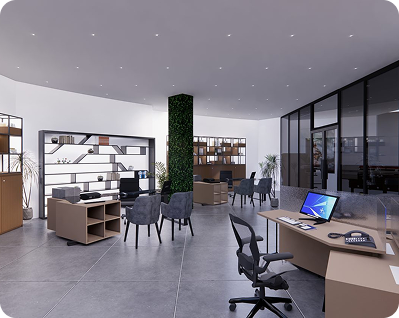
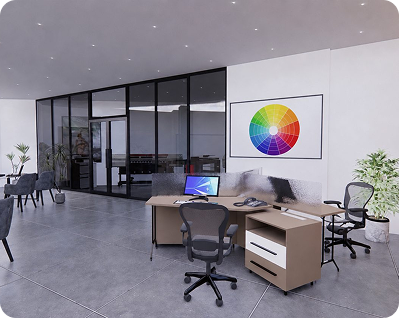
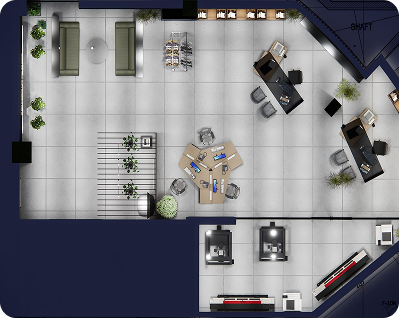
The fix was not to move proofs faster. It was to move the conversation to where the stakeholder already was. With designers placed inside the buildings of the departments they served, a request became a meeting rather than a mail thread. The stakeholder could see the paper stocks on hand, feel a fold, understand how a piece would be packaged, and sit beside the designer to watch the first version take shape instead of imagining it.
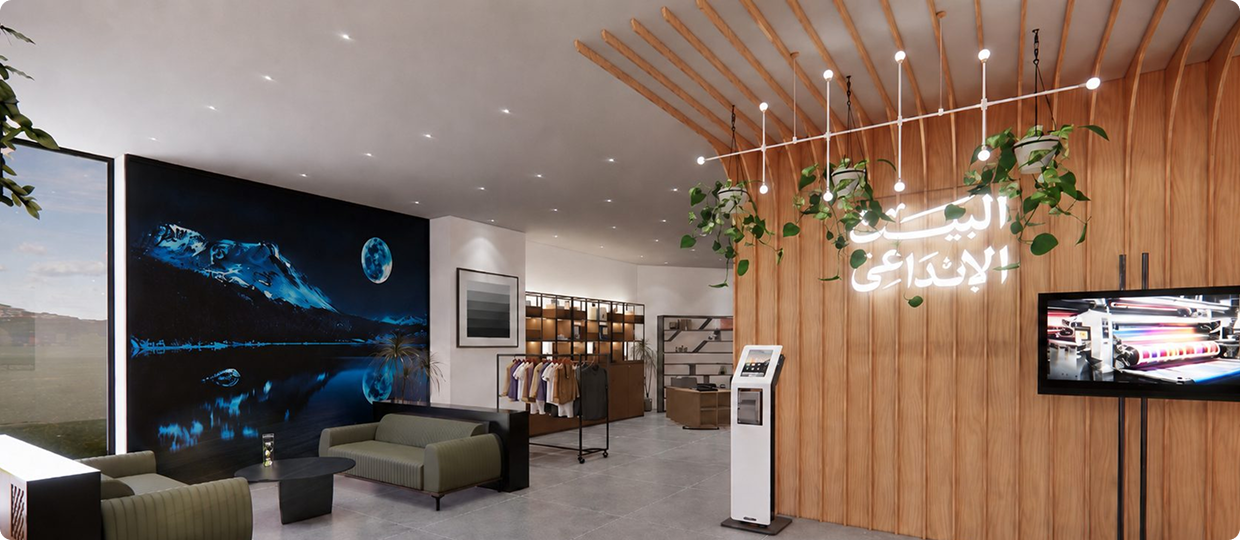
The House also became a quiet showroom for what the presses could actually do, far beyond official stationery, so stakeholders began to ask for work they had not known was possible. The aim was to make the stakeholder a partner in shaping the final product, not only the person who asked for it.
Chapter III
THE architecture
Chapter IV
THE outcomes
By moving the conversation closer to the stakeholder, the approval cycle changed. Requests became clearer earlier, proofs became more accurate, and production moved with less friction. The department was no longer waiting for feedback to travel back and forth. It was building alignment at the point of request.
Daily output · projects per day
Chapter V
WHAT I learned
The most powerful operational changes are often the ones that look least like operational changes.